with Steward Butterfield, Slack CEO & Co-Founder
Beim Abspielen wird Audio von Podigee geladen. Mehr zum Datenschutz
Darum geht’s
- Can you give us a little introduction about yourself?
- Are you still working with the same team?
- How does Slack change our Workstyle?
Originalbeschreibung verfügbar
Über dieses Gespräch
"90% of my job is to make sure that the organization is performing at the highest possible level."
New work is definitely about the people. It's ‘people before paper’. But if you were to ask someone what communication tool truly represents new work, in almost all cases, people will say: Slack. We had the honour of meeting Stewart Butterfield, the co-founder and CEO of Slack. To put it in perspective, Slack is known as one of the fastest growing companies in history and one of the hottest startups of the time. With a valuation of over 5 billion US dollars, Slack is still growing with roughly 1000 people working within the organisation.
Stewart deeply cares about the way they work at Slack and he shared with me very openly how his role as a leader has changed. Successful, yet humble. Innovative, yet down-to-earth, with a very fundamental understanding for what is important in life and work. It was definitely an interview that I enjoyed a lot, since we have many clients who use this tool and ask us for our input and advice. So for this episode, we went one step further - directly to the source: How Slack is used at Slack effectively and how they live and push ‘new work’ to new limits. And as Stewart hints throughout the discussion - it's not just about the tool.
Have fun with Episode 60 of the #OntheWaytonewWork Podcast via:
SPOTIFY spotify.onthewaytonewwork.com
SOUNDCLOUD soundcloud.com/onthewaytonewwork
And ITUNES itunes.onthewaytonewwork.com
And all book tips here books.onthewaytonewwork.com
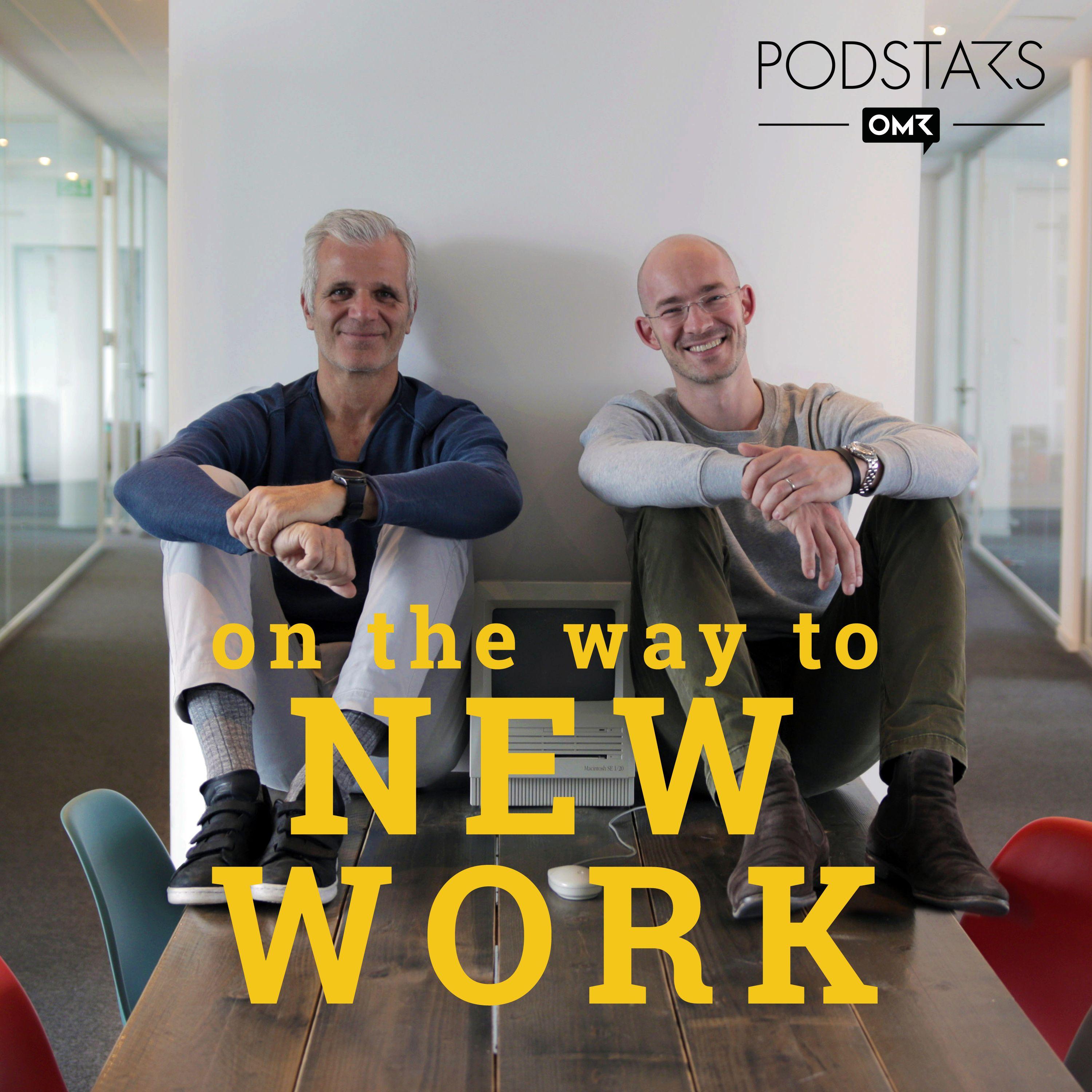
With Christoph Magnussen and Michael Trautmann
Shownotes:
Can you give us a little introduction about yourself? (0:40 Min.)
Are you still working with the same team? (2:40 Min.)
How does Slack change our Workstyle? (4:40 Min.)
How do Leaders have to adopt new Technologies? (12:20 Min.)
Where does your motivation to change our way of working come from? (20:50 Min.)
How has your culture changed while you were growing from twenty to over 1000 employees? (25:00 Min.)
How is your company culture structured? (29:10 Min.)
How do you organise your physical Workspace? (37:10 Min.)
Can you share with us, how you keep yourself in such a good mood? (41:30 Min.)
Where do you get inspiration from? (52.20 Min.)
Zum Weiterlesen.
Bücher und Links, die dieser Folge in unserer Leseliste zugeordnet sind. Die Empfehlungen stammen aus dem damaligen Gespräch; externe Angebote können sich ändern.
Für diese Folge liegt noch kein öffentliches Transkript vor. Die Suche nutzt die Folgenbeschreibung.